
Angry Similes help writers describe frustration, rage, irritation, and intense emotions with vivid comparisons. Instead of simply saying someone is angry, you can create memorable images that make your writing more expressive and engaging. Whether you write stories, essays, speeches, or everyday conversations, these similes add depth and emotion. In this guide, you’ll learn what Angry Similes are, why they matter, different types, practical writing tips, and 30 unique examples with meanings and sample sentences.
Definition of Angry Similes
Angry Similes are comparisons that describe anger by using words like or as. They help readers picture how angry someone feels by comparing that emotion to something familiar, powerful, or dramatic.
What Is a Simile?
A simile compares two different things using words like or as to make a description more vivid and interesting.
Example
- As brave as a lion.
- Like a ship without a sail.
- As quiet as a whisper.
- Like lightning across the sky.
- As cold as ice.
- Like a bird set free.
Why Use Angry Similes in Writing?
- Make emotional scenes more vivid.
- Help readers imagine a character’s feelings.
- Add creativity to stories and poems.
- Replace repetitive words like “very angry.”
- Create memorable descriptions.
- Improve storytelling and dialogue.
- Add humor, drama, or suspense.
- Keep readers engaged.
Types of Similes
Different Angry Similes create different emotional effects. Some sound dramatic, while others add humor or poetry.
Nature-Based Similes
Nature often reflects powerful emotions such as storms, fire, and volcanoes.
Example
- Like a raging wildfire.
- As fierce as a thunderstorm.
- Like a volcano ready to erupt.
- As hot as desert sand.
Animal-Based Similes
Animals naturally express strength, aggression, or defense, making them excellent comparisons.
Example
- Like a cornered bear.
- As angry as a disturbed hornet.
- Like a growling wolf.
- As fierce as a protective tiger.
Everyday Object Similes
Ordinary objects can symbolize pressure, heat, or explosions of emotion.
Example
- Like a boiling kettle.
- As tight as a stretched rope.
- Like an overheated engine.
- As sharp as a broken blade.
Writing Tips and Common Mistakes
Useful Tips
- Match the simile to the mood.
- Keep comparisons simple.
- Use original comparisons whenever possible.
- Avoid overusing similes in one paragraph.
- Choose comparisons that readers understand easily.
- Read the sentence aloud to check its flow.
Common Mistakes to Avoid
- Mixing unrelated comparisons.
- Example: As angry as thunder and soft like cotton.
- Using too many similes together.
- Choosing confusing comparisons.
- Repeating the same simile throughout your writing.
- Forgetting to use “like” or “as” in a simile.
30 Angry Similes
Like a volcano ready to erupt
Meaning: Very close to losing control.
Detailed Explanation: This simile compares anger to a volcano building pressure before an eruption.
Tone: Dramatic
Examples
- She looked like a volcano ready to erupt after the argument.
- His face became like a volcano ready to erupt.
- Everyone stepped back because he seemed like a volcano ready to erupt.
As fierce as a thunderstorm
Meaning: Extremely angry and intense.
Detailed Explanation: The comparison highlights loud, forceful anger.
Tone: Dramatic
Examples
- Her voice was as fierce as a thunderstorm.
- He entered the room as fierce as a thunderstorm.
- The coach became as fierce as a thunderstorm after the loss.
Like a boiling kettle
Meaning: Anger is steadily building.
Detailed Explanation: Just as water boils under heat, anger grows until it bursts.
Tone: Everyday
Examples
- He stood like a boiling kettle.
- She felt like a boiling kettle before speaking.
- His patience disappeared like a boiling kettle overflowing.
As hot as burning coal
Meaning: Filled with intense anger.
Detailed Explanation: Burning coal represents powerful heat and emotion.
Tone: Dramatic
Examples
- His temper was as hot as burning coal.
- She became as hot as burning coal after the insult.
- Their argument left everyone as hot as burning coal.
Like a trapped tiger
Meaning: Angry because of frustration.
Detailed Explanation: A trapped tiger becomes dangerous and unpredictable.
Tone: Powerful
Examples
- He paced like a trapped tiger.
- She glared like a trapped tiger.
- The prisoner moved like a trapped tiger.
As sharp as broken glass
Meaning: Angry words that hurt.
Detailed Explanation: Broken glass symbolizes painful speech.
Tone: Serious
Examples
- Her reply was as sharp as broken glass.
- His comments became as sharp as broken glass.
- Their conversation turned as sharp as broken glass.
Like a wildfire in dry grass
Meaning: Anger spreads quickly.
Detailed Explanation: Wildfires grow rapidly, just like sudden rage.
Tone: Dramatic
Examples
- His anger spread like a wildfire in dry grass.
- Rumors made tempers rise like a wildfire in dry grass.
- The disagreement grew like a wildfire in dry grass.
As restless as stormy waves
Meaning: Unable to stay calm.
Detailed Explanation: Stormy seas reflect emotional unrest.
Tone: Poetic
Examples
- She became as restless as stormy waves.
- He waited as restless as stormy waves.
- The crowd remained as restless as stormy waves.
Like an overheated engine
Meaning: Ready to break down from anger.
Detailed Explanation: Too much pressure causes both engines and emotions to fail.
Tone: Everyday
Examples
- He sounded like an overheated engine.
- She felt like an overheated engine.
- His mind worked like an overheated engine.
As loud as crashing thunder
Meaning: Expressing anger loudly.
Detailed Explanation: Thunder creates a powerful image of explosive emotion.
Tone: Dramatic
Examples
- His shout was as loud as crashing thunder.
- She answered as loudly as crashing thunder.
- The manager became as loud as crashing thunder.
Like a hornet defending its nest
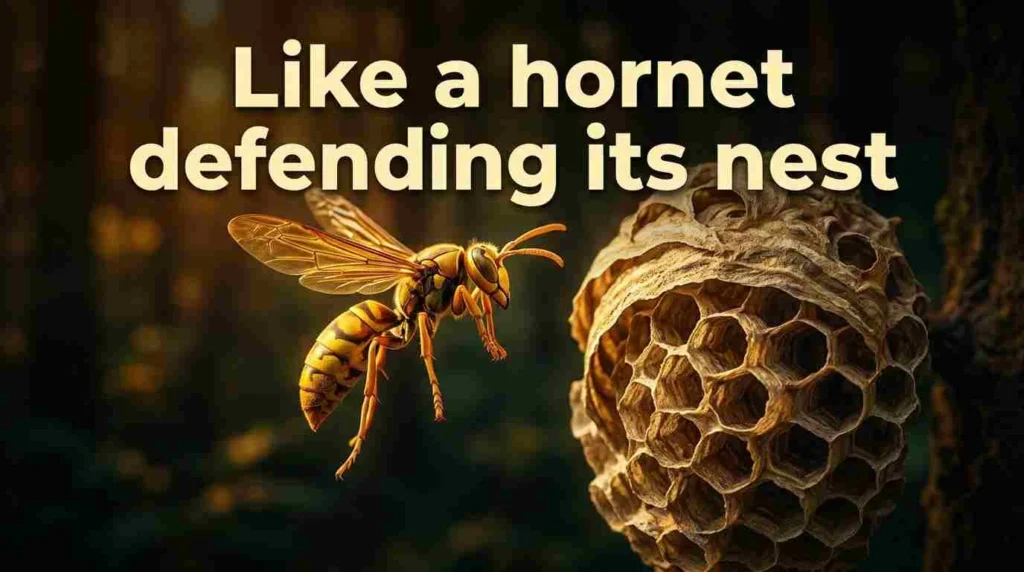
Meaning: Extremely defensive and angry.
Detailed Explanation: Hornets aggressively protect their homes.
Tone: Intense
Examples
- She reacted like a hornet defending its nest.
- He argued like a hornet defending its nest.
- The team fought like hornets defending their nest.
As red as glowing embers
Meaning: Face flushed with anger.
Detailed Explanation: Embers glow bright red like an angry face.
Tone: Visual
Examples
- His face became as red as glowing embers.
- She looked as red as glowing embers.
- They stood as red as glowing embers.
Like a shaken soda bottle
Meaning: Ready to explode emotionally.
Detailed Explanation: Pressure builds until it bursts.
Tone: Humorous
Examples
- He looked like a shaken soda bottle.
- She waited like a shaken soda bottle.
- The child acted like a shaken soda bottle.
As tense as a drawn bow
Meaning: Full of anger and pressure.
Detailed Explanation: A stretched bow represents emotional tension.
Tone: Serious
Examples
- He stood as tense as a drawn bow.
- She felt as tense as a drawn bow.
- The meeting became as tense as a drawn bow.
Like a storm behind dark clouds
Meaning: Hidden anger waiting to appear.
Detailed Explanation: The anger exists even if it is not visible yet.
Tone: Poetic
Examples
- His anger lingered like a storm behind dark clouds.
- She smiled like a storm behind dark clouds.
- The silence felt like a storm behind dark clouds.
As fierce as a charging bull
Meaning: Aggressively angry.
Detailed Explanation: A charging bull shows unstoppable force.
Tone: Powerful
Examples
- He charged in as fierce as a charging bull.
- She answered as fiercely as a charging bull.
- The crowd reacted as fiercely as a charging bull.
Like a burning furnace
Meaning: Filled with blazing anger.
Detailed Explanation: A furnace creates intense heat like powerful emotions.
Tone: Dramatic
Examples
- His anger burned like a burning furnace.
- She looked like a burning furnace.
- He felt like a burning furnace inside.
As wild as a hurricane
Meaning: Completely out of control.
Detailed Explanation: Hurricanes represent an overwhelming force.
Tone: Dramatic
Examples
- He became as wild as a hurricane.
- Their fight turned as wild as a hurricane.
- The captain shouted as wild as a hurricane.
Like a lion protecting its pride
Meaning: Angry while defending others.
Detailed Explanation: Lions fiercely guard their family.
Tone: Noble
Examples
- She stood like a lion protecting its pride.
- He argued like a lion protecting its pride.
- The mother reacted like a lion protecting its pride.
As bitter as black coffee
Meaning: Angry with lingering resentment.
Detailed Explanation: Bitter coffee symbolizes lasting frustration.
Tone: Serious
Examples
- His mood stayed as bitter as black coffee.
- She sounded as bitter as black coffee.
- The conversation became as bitter as black coffee.
Like lightning striking twice
Meaning: Sudden repeated bursts of anger.
Detailed Explanation: Lightning appears unexpectedly and powerfully.
Tone: Dramatic
Examples
- He exploded like lightning striking twice.
- She reacted like lightning striking twice.
- His temper returned like lightning striking twice.
As cold as frozen steel
Meaning: Angry without showing emotion.
Detailed Explanation: Some anger appears calm but remains dangerous.
Tone: Serious
Examples
- His expression became as cold as frozen steel.
- She answered as cold as frozen steel.
- The officer stayed as cold as frozen steel.
Like a cracked dam
Meaning: Unable to hold back anger.
Detailed Explanation: Pressure eventually breaks through.
Tone: Dramatic
Examples
- His emotions burst like a cracked dam.
- She cried like a cracked dam breaking.
- The frustration escaped like a cracked dam.
As explosive as fireworks
Meaning: Sudden emotional outburst.
Detailed Explanation: Fireworks burst without warning.
Tone: Colorful
Examples
- He became as explosive as fireworks.
- She answered as explosively as fireworks.
- Their debate grew as explosive as fireworks.
Like smoke from a chimney
Meaning: Anger slowly becoming visible.
Detailed Explanation: Small signs reveal growing frustration.
Tone: Poetic
Examples
- His anger rose like smoke from a chimney.
- She sighed like smoke from a chimney.
- Tension drifted like smoke from a chimney.
As rough as crashing waves
Meaning: Harsh and emotional.
Detailed Explanation: Rough waves symbolize emotional turmoil.
Tone: Poetic
Examples
- His voice sounded as rough as crashing waves.
- She spoke as roughly as crashing waves.
- Their argument became as rough as crashing waves.
Like a burning match
Meaning: Anger ignites instantly.
Detailed Explanation: A tiny spark quickly becomes fire.
Tone: Everyday
Examples
- He flared up like a burning match.
- She reacted like a burning match.
- His temper sparked like a burning match.
As fierce as a forest fire
Meaning: Powerful and destructive anger.
Detailed Explanation: Forest fires spread rapidly and cause damage.
Tone: Dramatic
Examples
- His temper became as fierce as a forest fire.
- She argued fiercely like a forest fire.
- Their conflict grew as fierce as a forest fire.
Like a clenched fist
Meaning: Controlled but intense anger.
Detailed Explanation: A clenched fist symbolizes restrained emotion.
Tone: Serious
Examples
- He stood like a clenched fist.
- She waited like a clenched fist.
- His silence felt like a clenched fist.
As relentless as pounding rain
Meaning: Anger that continues without stopping.
Detailed Explanation: Constant rain reflects lasting frustration.
Tone: Poetic
Examples
- His complaints were as relentless as pounding rain.
- She remained as relentless as pounding rain.
- The criticism continued as relentlessly as pounding rain.
Top 10 Angry Similes
| Simile | Meaning | Tone |
| Like a volcano ready to erupt | About to explode with anger | Dramatic |
| As fierce as a thunderstorm | Extremely intense anger | Dramatic |
| Like a boiling kettle | Anger building up | Everyday |
| Like a trapped tiger | Frustrated and dangerous | Powerful |
| Like a wildfire in dry grass | Anger spreads quickly | Dramatic |
| As loud as crashing thunder | Very loud anger | Dramatic |
| As fierce as a charging bull | Aggressive anger | Powerful |
| Like a burning furnace | Blazing rage | Dramatic |
| Like a cracked dam | Unable to hold back emotions | Dramatic |
| Like a burning match | Anger starts instantly | Everyday |
Conclusion
Angry Similes bring emotions to life by turning ordinary descriptions into vivid and memorable expressions. Whether you are writing a story, poem, speech, or classroom assignment, these comparisons help readers understand the strength, cause, and mood of someone’s anger without repeating the same words. Choosing the right simile also adds personality to your writing, making characters and situations feel more realistic and engaging.
From dramatic comparisons like storms and volcanoes to humorous ones involving everyday objects, Angry Similes offer endless creative possibilities. The key is to match each simile with the context and tone of your writing so it feels natural and meaningful. As you continue improving your writing skills, practice using different similes to expand your vocabulary and create a stronger emotional impact. With thoughtful use, Angry Similes can transform simple sentences into powerful descriptions that readers remember long after they finish reading.
FAQs
What are Angry Similes?
Angry Similes are comparisons that describe anger by using words like or as. They help readers picture emotions more clearly by comparing anger to familiar objects, animals, or natural events. These expressions make writing more colorful, engaging, and easier to understand.
Why are Angry Similes important in writing?
Angry Similes make emotional scenes more vivid and interesting. They help readers imagine how a character feels instead of simply being told that someone is angry. This improves storytelling, creative writing, poetry, and even descriptive essays by adding stronger visual imagery.
How do I create my own Angry Similes?
Start by thinking about something that shows power, heat, speed, or tension. Then compare it to anger using like or as. Choose comparisons that fit the situation naturally so readers can easily understand the emotion you want to express.
Can Angry Similes be used in everyday conversations?
Yes. Angry Similes work well in everyday speech, storytelling, and casual conversations. They make your expressions more interesting and descriptive without sounding complicated. However, use them naturally so they fit the context and audience.
What is the difference between a simile and a metaphor?
A simile compares two things using like or as, while a metaphor states that one thing is another without using those words. For example, “as fierce as a storm” is a simile, while “his anger was a storm” is a metaphor.
Are Angry Similes suitable for children?
Yes. Family-friendly Angry Similes help children learn descriptive language and improve creative writing. Teachers often use simple similes in classrooms because they encourage imagination while making vocabulary lessons more enjoyable and memorable.
Should I use many Angry Similes in one paragraph?
No. Using too many similes in the same paragraph can make your writing feel repetitive and distracting. Instead, choose one or two strong comparisons that best match the emotion and allow the rest of your writing to stay clear and balanced.
What are the most common themes used in Angry Similes?
Many Angry Similes compare anger to storms, fire, volcanoes, wild animals, boiling water, or powerful natural forces. These themes work well because readers easily associate them with strength, intensity, and emotional energy.
Can Angry Similes improve creative writing?
Absolutely. Angry Similes make stories, poems, and character descriptions more expressive. They help readers visualize emotions, build stronger scenes, and create memorable moments that leave a lasting impression without relying on repetitive wording.
How can I choose the best Angry Simile?
Select a simile that matches the character, setting, and mood of your writing. A humorous comparison may suit a lighthearted story, while a dramatic one fits serious scenes. Always choose a comparison that feels natural and strengthens your message.

